The Paradox of Our Time
One of the most confusing ideas we hear today is this:
“Don’t take life too seriously.”
At first, it sounds freeing. Almost comforting.But if you really think about it, it raises a genuine concern:If we stop taking life seriously :
- Won’t we become careless?
- Won’t discipline fall apart?
- Won’t purpose weaken?
At the same time, there’s another belief we rarely question:
If something matters, we must take it seriously.
It sounds responsible. Mature. Almost obvious.But carried too far, seriousness does something unexpected.When life is taken too seriously:
- Every decision feels heavy
- Every mistake feels personal
- Every outcome feels like judgment
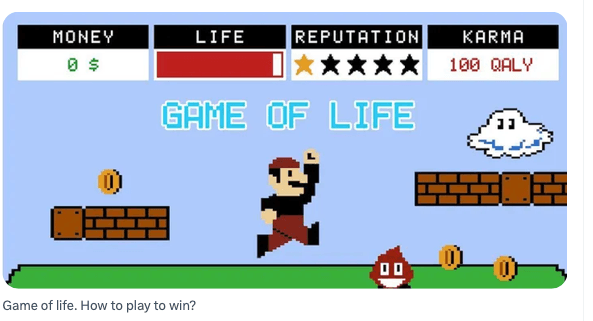
Life becomes a pressure system.And from there, people tend to fall into two extremes.On one side, they become casual. They stop trying fully. They avoid effort. They drift.On the other side, they become tense. They overthink, over-control, and attach their identity to outcomes.So the real question is:How is life actually supposed to be lived?Game of life. How to play to win?
Three Ways of Living
If you look closely, life doesn’t really divide into seriousness vs casualness. It unfolds across three very different states.
1. Casualness — The Drift
Casualness which is marked by low commitment, weak discipline, and easy excuses. To be casual is to neglect discipline which is to allow impulses, distractions, and comfort to dictate conduct.
In a deeper sense, it’s a kind of drift.
You stop directing your life. You just move with whatever is easiest.
Casualness, in a Nietzschean sense, is not freedom but a quiet form of nihilism the point at which the will no longer asserts itself strongly enough to create meaning. The casual individual does not struggle, does not overcome, does not shape; he merely drifts, mistaking ease for liberation. It feels easy. But over time, it makes life smaller.Casualness reflects a mind that is unfocused and an action that lacks intention.
2. Egoic Seriousness — The Burden
Egoic seriousness where effort is high, but driven by fear, tension, and self-importance, making action heavy and fragile.
“My worth depends on this,” “I must control the outcome,” “I cannot afford to fail.”
Think of a student before an exam when everything feels like it will decide their future. Instead of performing better, they freeze, second-guess, and lose clarity. Ultimately to take life “too seriously” is the quiet confession of a weak spirit. It reveals a man who has surrendered his center to outcomes, who has allowed results, approval, and failure to dictate his sense of worth. In Nietzschean terms, it is a subtle form of nihilism disguised as responsibility: when one’s worth becomes hostage to outcomes, one has already conceded that value lies outside oneself.
3. Sacred Play — The Third State
The third state isn’t about finding a balance between seriousness and casualness it feels more like stepping out of both. It is sacred play a state of full effort and deep sincerity combined with inner looseness and freedom from attachment.
Just as an actor gives everything to a performance feeling, expressing, and immersing completely yet remains aware that they are not the character, you too are meant to act in life with total sincerity while remembering that your identity is larger than any single outcome.
“take life as play,” the deeper spiritual meaning is not to become careless, but to engage fully without becoming internally possessed by the role you are playing. You’re fully in the game, but you’re not trapped inside it. It is the stance of you who acts with full intensity, yet without servitude to outcome. The spiritual essence of the sacred play can be seen in GITA as follows
“You have a right to perform your prescribed duties, but you are not entitled to the fruits of your actions. Never consider yourself the cause of the results, and never be attached to not doing your duty.” — Bhagavad Gita 2.47
“Be steadfast in yoga, O Arjuna. Perform your duty and abandon all attachment to success or failure.” — Bhagavad Gita 2.48
In this state, action stops feeling like something you have to carry and starts feeling like something that comes from you. Even uncertainty isn’t threatening anymore it’s just part of the game. There’s a quiet confidence here : not that things will go your way, but that whatever happens, you’ll be able to shape it into something meaningful.
In the end, don’t ask whether life should be serious or casual.Ask something deeper:
Are you willing to engage fully, without being consumed by it?
If Yes. Do what you do with force, with attention, with a kind of inner fire that does not depend on applause or fear of failure.Work as if it matters because it does! But do not become small enough to measure your self worth with the outcome. And refuse to let outcomes sit in judgment over you. Let success and failure be materials, not mastersAs Jim Rohn put it:
“Learn to be happy with what you have while you pursue all that you want.”
Work fully. Care deeply. Love Immensely . Always be grateful But stay free.
Enjoyed this piece?
Get writing like this in your inbox
Finance, governance & ideas across disciplines. No noise.
Subscribe — It's free